We all know the classic Cancer man profile: nurturing, intuitive, deeply loyal. He's the guy who remembers your favorite soup when you're sick and seems to have a sixth sense about your feelings. But here's the thing nobody talks about in those fluffy horoscope columns—the dark side of a Cancer male can be one of the most complex and emotionally draining experiences in the zodiac.
I've spent over a decade counseling clients on relationship dynamics, and I've seen the fallout from the Cancer man's shadow self firsthand. It's not that they're bad people. Far from it. But their intense emotional nature, when unbalanced, twists their greatest strengths into potent weapons. That legendary empathy becomes manipulation. That fierce protectiveness morphs into suffocating control. The shell isn't just for defense; it's a fortress where grudges are stored and passive-aggressive campaigns are planned.
If you're entangled with one, you might feel like you're walking on emotional eggshells. One minute you're the center of his universe, the next you're shut out in the cold for a slight you didn't even know you committed. This isn't about bashing Cancer men. It's a clear-eyed look at the toxic traits that can emerge, why they happen, and most importantly, how you can navigate them without losing yourself.
Navigate the Emotional Maze
- The Shell Is a Weapon: Masterful Withdrawal & The Silent Treatment
- Emotional Blackmail: The Guilt Trip Specialist
- Possessive Clinginess: Smothering Under the Crab's Claw
- The Passive-Aggressive Kingpin
- The Mood Swing Whirlpool
- Manipulative Nurturing: Love as a Transaction
- How to Deal with a Cancer Man's Dark Side: A Practical Guide
- Your Burning Questions on the Cancer Male Dark Side
The Shell Is a Weapon: Masterful Withdrawal & The Silent Treatment
Every astrology book mentions the Cancer shell. The common wisdom is that he retreats when hurt. The dark side is that this retreat isn't always passive; it's often a calculated form of punishment. He doesn't just go quiet to heal; he goes silent to make you feel the void of his absence.
You'll send a normal text and get radio silence for days. He'll be physically present but emotionally on another planet. This isn't a simple time-out. It's a control tactic. By withdrawing affection, communication, and warmth, he's demonstrating that your access to him is conditional on your behavior. The unspoken message is: "You upset me, so now you suffer by being deprived of me."
The worst part? He'll often deny he's doing it. "I'm just tired," or "I needed some space." But the timing is always suspiciously coincidental with a perceived slight.
Emotional Blackmail: The Guilt Trip Specialist
If manipulation were an art form, an unevolved Cancer man would be a Renaissance master. His medium? Guilt. He has an uncanny ability to frame any of your needs or boundaries as a personal betrayal.
Want a night out with friends? "After the week I've had, I was really looking forward to us time, but I guess your friends are more important." Considering a job in another city? "I suppose I'll just be here alone, but don't worry about me." He weaponizes his vulnerability. He makes his emotional state your responsibility, so you're constantly policing your actions to avoid triggering his disappointment or sadness.
It's exhausting. You start canceling plans, downplaying your achievements, and shrinking your world to avoid the heavy sigh and the wounded look.
Possessive Clinginess: Smothering Under the Crab's Claw
His loyalty is legendary, but the dark flip side is a possessiveness that can feel like being slowly suffocated. He doesn't just want to be your main partner; he wants to be your only source of emotional sustenance. Friends, family, hobbies—anything that takes your time and energy away from "the nest" can be viewed as a threat.
He might not forbid you from seeing people. It's subtler. He'll get moody and distant when you make plans without him. He'll make comments about that friend he "doesn't quite trust." He'll need you more intensely whenever your attention is elsewhere. Over time, you might find yourself voluntarily giving things up just to keep the peace and avoid his chilly withdrawals.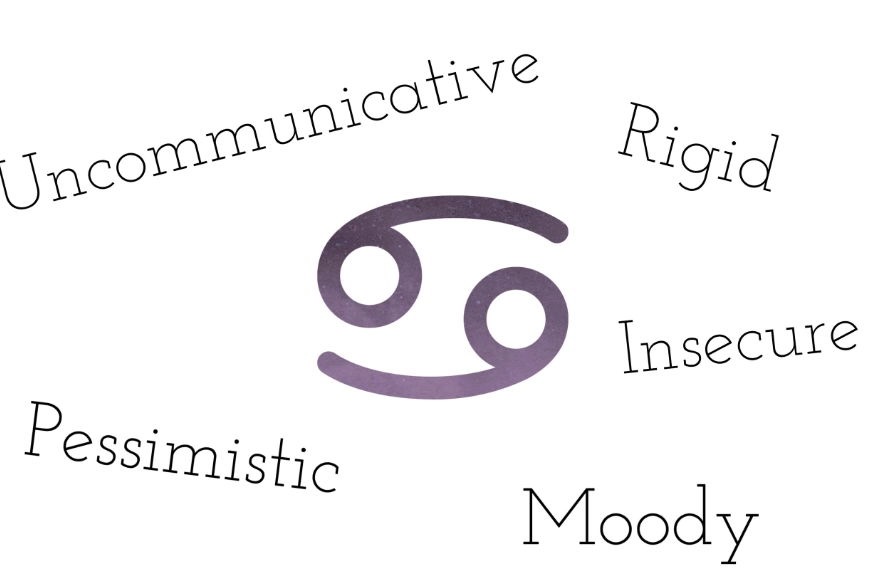
A key insight most miss: This clinginess often stems from a deep-seated fear of abandonment, not just love. He's subconsciously trying to secure you so tightly that you can't possibly leave, confusing control for security. Recognizing this fear is the first step in addressing the behavior.
The Passive-Aggressive Kingpin
Direct conflict? A healthy Cancer man can handle it. A dark-side Cancer man would rather walk on hot coals. Instead of saying, "It hurt my feelings when you forgot our call," he'll become conspicuously "busy" the next time you try to reach him. Instead of discussing a financial worry, he'll make pointed comments about "how expensive everything is these days" while looking at you.
This creates a minefield. You're left to decode his moods, guess what you did wrong, and initiate the repair—all while he maintains the moral high ground of not having "started a fight." It's a way to express anger and inflict consequence while keeping his hands technically clean.
 The Mood Swing Whirlpool
We all have bad days. The Cancer man's dark side involves pulling everyone into his bad day. His moods aren't private affairs; they're the prevailing weather system of the relationship. When he's down, the entire home must be down. Laughter feels inappropriate. Lightheartedness is met with a sour look.
You become a hostage to his emotional state. You learn to scan his face the moment he walks in, adjusting your own demeanor to match his. This emotional labor—constantly managing and absorbing another person's moods—is one of the most draining aspects of dealing with his shadow self.
The Eternal Victim Mentality
This is a big one. On his dark side, the Cancer man can craft a narrative where he is perpetually wronged—by his boss, his family, his friends, and yes, eventually by you. This serves a dual purpose: it elicits your nurturing (back to that transactional love) and it absolves him of responsibility.
Nothing is ever truly his fault. A failed project? His colleagues sabotaged him. A friendship ended? The friend was jealous. A relationship problem? You're too critical. This mindset makes growth impossible. How can you solve problems with someone who won't acknowledge their role in creating them?
Manipulative Nurturing: Love as a Transaction
This is the most insidious trait because it corrupts his greatest gift. The nurturing becomes a ledger. The home-cooked meals, the thoughtful gestures, the emotional support—they're not given freely. They are investments with expected returns of loyalty, compliance, and unwavering attention.
You'll hear it in phrases like, "After all I've done for you..." or "I'm always there for you, but when I need you..." His care feels conditional. It creates a debt you can never quite repay, keeping you perpetually obligated and guilty for wanting anything he doesn't explicitly provide.
How to Deal with a Cancer Man's Dark Side: A Practical Guide
Knowing the traits is one thing. Surviving them is another. Here’s a practical, step-by-step approach. This isn't about changing him (you can't), but about protecting your sanity and setting the terms of the relationship.
1. Name the Behavior, Not the Emotion
When he withdraws, don't plead, "Why are you so upset?" That plays into the drama. State the observable behavior calmly and directly: "I've noticed you've stopped responding to my messages for the past two days. That makes it difficult to connect. Can we talk about what's happening?" This removes you from the emotional guessing game and forces the issue into the open.
2. Set Unbreakable Boundaries (And Mean It)
Boundaries are kryptonite to passive-aggression and guilt trips. Decide what you will not tolerate. For example: "I am happy to give you space when you're upset, but the silent treatment for more than 24 hours is not acceptable for me. If you need time, please communicate that." Or, "I am going out with my friends on Friday. I'd love to see you Saturday." The key is to state your boundary and then act on it without anger. If he gives you the silent treatment, go about your life. Don't chase.
3. Refuse to Engage in Emotional Accounting
When he hints at a ledger of favors, shut it down gently but firmly. "I appreciate everything you do, and I do the things I do for you because I care, not to keep score. It makes me uncomfortable when it feels transactional." This calls out the manipulation without accusation.
4. Encourage Direct Communication (And Model It)
Say things like, "It's easier for me to address things when you tell me directly what's bothering you. I can't read your mind, and I don't want to guess wrong." Then, model this behavior yourself. Be direct, calm, and clear in your own communication.
5. Maintain Your Independent Life
This is non-negotiable. Nurture your friendships, your hobbies, your career. His mood cannot be the barometer for your entire life. When you have a full life outside of him, his attempts at control and guilt-tripping lose their power because you have other sources of validation and joy. This also makes you more attractive to him.
Let's visualize the core dark traits and their impacts:
| Dark Side Trait | How It Manifests | Root Cause (Often) | Impact on Partner |
|---|---|---|---|
| Masterful Withdrawal | Silent treatment, emotional unavailability as punishment. | Fear of vulnerability, need for control. | Anxiety, walking on eggshells, constant need to "fix" things. |
| Emotional Blackmail | Guilt-tripping, framing your needs as betrayal. | Deep insecurity, fear of abandonment. | Loss of self, resentment, shrinking one's world. |
| Possessive Clinginess | Subtle discouragement of outside relationships/interests. | Extreme fear of loss, mistrust. | Social isolation, loss of identity, feeling smothered. |
| Passive-Aggression | Sarcasm, backhanded compliments, intentional forgetfulness. | Inability to process anger healthily, conflict avoidance. | Confusion, constant second-guessing, emotional exhaustion. |
A Real-World Case Study: Emma and David
Emma came to me confused. Her Cancer boyfriend, David, was "the sweetest man" but she felt constantly drained. He'd cook her amazing dinners but get sullen if she had to work late. He'd remember her favorite flowers but then make a comment about how "expensive it is to be a good boyfriend." After a minor argument, he'd "need space" and ignore her texts for three days, only to reappear as if nothing happened, expecting her to be overly affectionate to "make up."
We worked on the steps above. The breakthrough came when Emma, instead of bombarding David with anxious texts during his next withdrawal, simply sent one message: "David, I care about you and I'm here to talk when you're ready. Until then, I'll be going about my plans." She then went to a movie with a friend. David re-engaged that night, confused she wasn't a wreck. Emma calmly reiterated her boundary about communication. It wasn't a magic fix, but it broke the cycle. David began to learn that his withdrawal tactic didn't yield the desired control, and slowly, hesitantly, started to communicate more directly when upset. The relationship improved because Emma stopped feeding the dark-side behaviors.
Your Burning Questions on the Cancer Male Dark Side
The dark side of a Cancer man isn't a death sentence for a relationship, but it is a severe warning label. It demands a partner with exceptional emotional intelligence, strong boundaries, and a rock-solid sense of self. You cannot fix him with more love. You can only decide what you will and will not accept, and act accordingly. Sometimes, the most nurturing thing you can do for a Cancer man lost in his shadow is to show him, through your boundaries, that his tactics no longer work. That might be the catalyst he needs to change. Or, it might be the clarity you need to walk away and find a relationship that doesn't require navigating an emotional labyrinth every single day.
Reader Comments